On November 23, the Centers for Medicare and Medicaid Services (CMS) announced negotiated prices for 15 Part D drugs selected for the Medicare Drug Price Negotiation Program (MDPNP).1 These drugs were selected in January 2025 based on overall gross Part D spending levels and other criteria as specified by the Inflation Reduction Act of 2022 (IRA).2 The negotiated prices, known as maximum fair prices (MFPs), will take effect on January 1, 2027. These 15 drugs are in addition to the initial 10 drugs selected for initial price applicability year (IPAY) 2026.
The 15 selected drugs and MFP discounts are shown in Figure 1 below, grouped by therapeutic area.
Figure 1: IPAY 2027 negotiated discounts
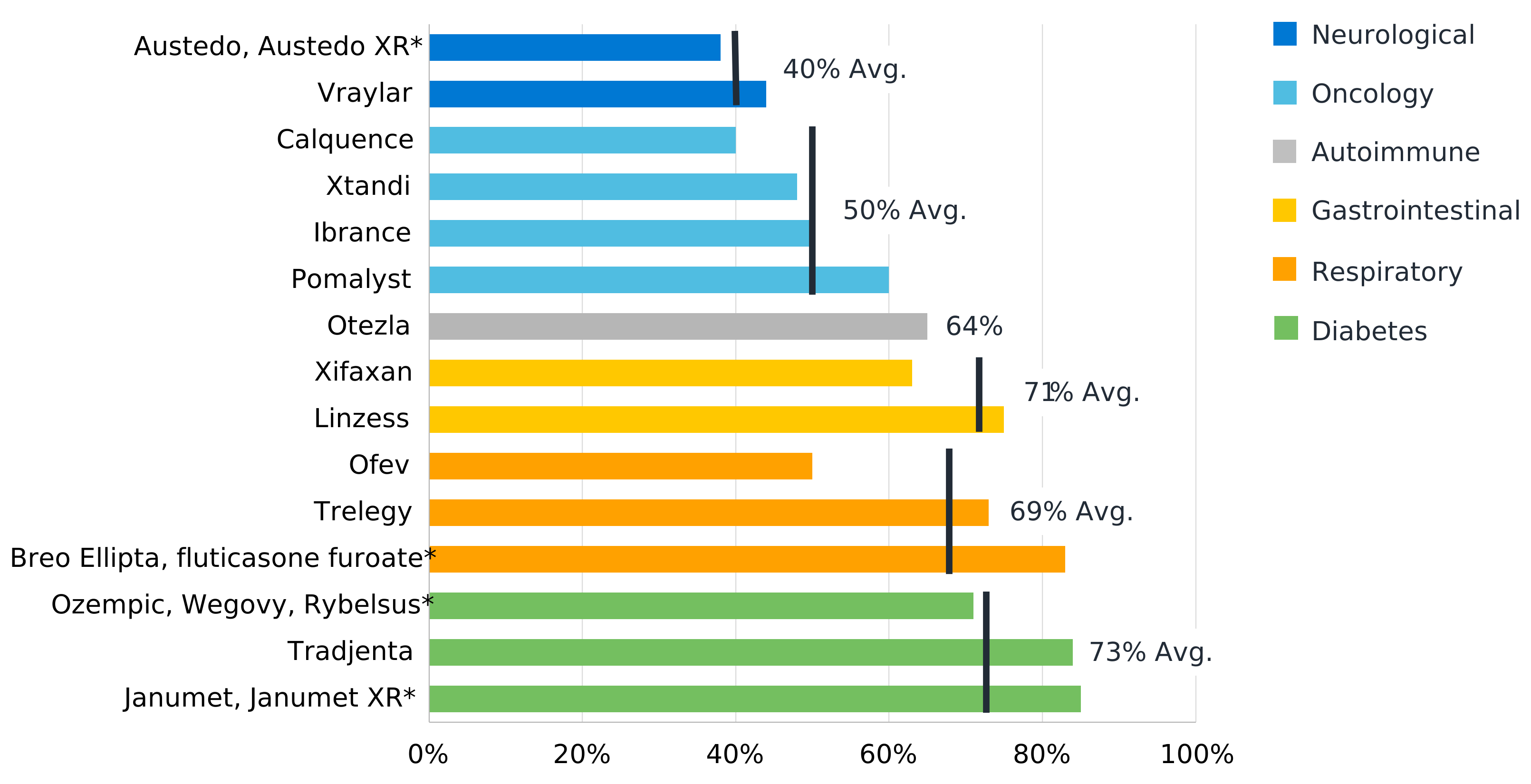
*Products with the same active moiety, or the same active ingredient used to treat a condition, are grouped together by CMS for the purposes of price negotiation. Averages are weighted on 2024 Part D gross costs.
IPAY 2027 prices reflect a range of discounts from list prices
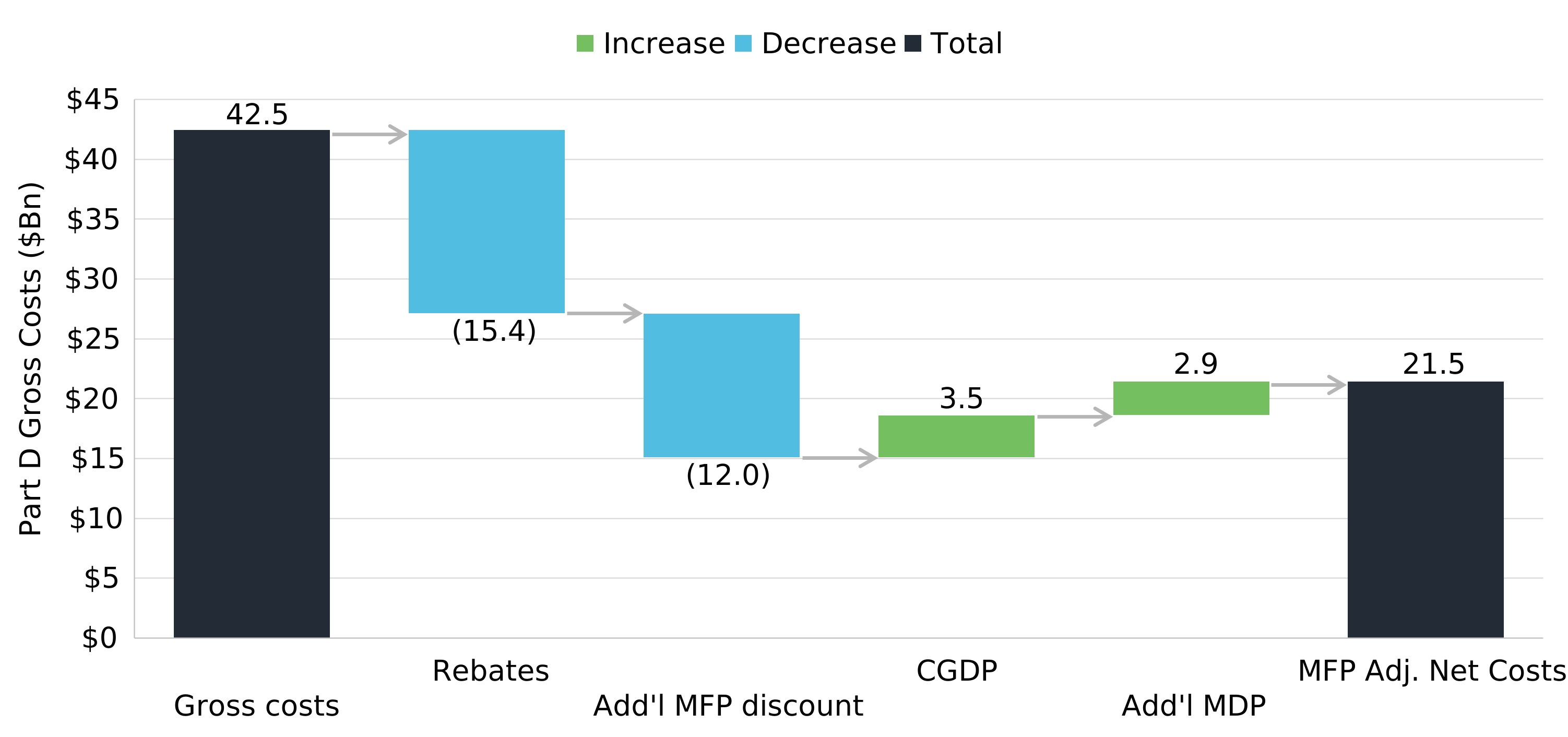
Per the CMS fact sheet,1 the 15 drugs selected for IPAY 2027 accounted for about 15% of total Part D spend in 2024. The MFPs reflect a range of discounts from list prices, from 38% to 85%. List price discounts are offset by assumed corresponding losses in rebates, so it is more important to compare MFPs against prices net of rebates to evaluate their impact. According to CMS, if these prices had been in place in 2024, net costs for these drugs would have been 44% lower. However, this too paints an incomplete picture, as selected drugs are no longer subject to the manufacturer discount program (MDP), which replaced the former coverage gap discount program (CGDP). CMS notes that accounting for 2024 CGDP would have reduced savings to 36%. The magnitude of CGDP in 2024 was lower for most products than projected 2027 MDP, which is typically about 15% of gross costs, or closer to 20% for high-cost, specialty products. As such, we estimate the true net savings may be closer to 25% to 30%. These dynamics are illustrated in Figure 2 below.
Figure 2: Breakdown of gross to net costs for IPAY 2027 drugs
IPAY 2027 discounts are significantly deeper than IPAY 2026
Compared to the IPAY 2026 MFPs, the discounts for IPAY 2027 drugs are significantly deeper—CMS had estimated that IPAY 2026 MFPs would have produced 22% savings on 2023 net costs, compared to the 44% savings for IPAY 2027 noted above. This is expected, given the IPAY 2027 guidance included explicitly accounting for CGDP, not just rebates, when analyzing net prices of therapeutic alternatives.3 Additionally, CMS likely took into account the MFPs of certain IPAY 2026 drugs that qualified as therapeutic alternatives to IPAY 2027 drugs, which may have contributed to the deeper IPAY 2027 discounts if IPAY 2026 MFPs were lower than other therapeutic alternatives (e.g., Jardiance and Farxiga may have been considered therapeutic alternatives to Ozempic). Figure 3 displays IPAY discounts and MFPs in therapeutic areas with both 2026 and 2027 selected drugs.
Figure 3: MFP and discounts for therapeutic areas with IPAY 2026 and 2027 drugs
Competitive pressures facing therapeutic areas with MFPs
In most therapeutic areas, a variety of drug types compete with MFP drugs. Figure 4 examines the mix of drugs in three classes: autoimmune agents, vesicular monoamine transporter 2 (VMAT2) inhibitors, and atypical antipsychotics. It compares the 2025 Part D share of days’ supply among selected MFP drugs, non-MFP brands, generics, and biosimilars within each class. The share of MFP scripts varies significantly across these three drug classes, and each class faces differing competitive forces.
Figure 4: share of 2025 Part D days supply*
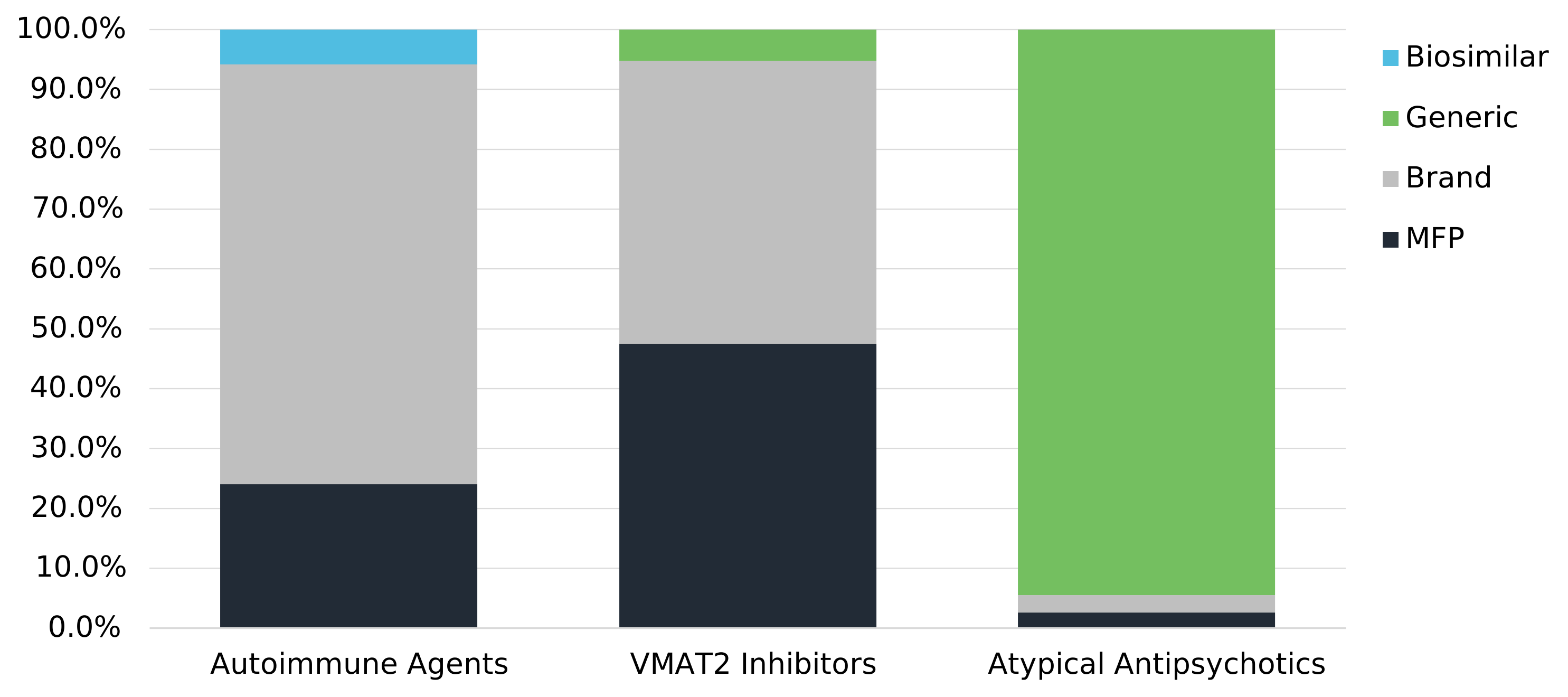
*MFP days’ supply is inclusive of IPAY 2026 and IPAY 2027 drugs.
Autoimmune agents include a diverse mix of drugs used to treat a range of conditions including rheumatoid arthritis, Crohn’s disease, plaque psoriasis, and ulcerative colitis. Brand drugs dominate the class, accounting for 94% of the 2025 Part D utilization, though Humira and Stelara biosimilars will continue gaining traction as more plans begin to prefer them over their reference products. In 2027, Otezla will join IPAY 2026 selections Stelara and Enbrel. These three products currently account for 24% of the volume in this crowded class.
VMAT2 inhibitors treat the movement disorders tardive dyskinesia and chorea associated with Huntington’s disease. The current market leader, Ingrezza, is not widely covered on Part D formularies. It competes with IPAY 2027 drug Austedo, whose formulary coverage declined in 2026 after being removed from WellCare’s PDP formularies. Starting in 2027 when MFP prices take effect, all Part D plans will be required to cover Austedo and Austedo XR on formularies.
Atypical antipsychotics treat conditions such as schizophrenia and bipolar disorder. Generics make up nearly 95% of utilization, though the more expensive brands, inclusive of drugs with MFPs, account for about 75% of the gross spend in the class. This is a protected class, so competing single-source brands are covered on all formularies but can have prior authorization criteria requiring prior treatment with generics. Vraylar’s MFP will take effect in 2027, and the competing brand Rexulti is a likely candidate to be selected for IPAY 2028.
2026 formulary coverage of 2027 MFP drugs
For initial 2027 formulary submission, IPAY 2027 drugs will have guaranteed formulary coverage, though there may be cases where immediate substitution is later allowed due to a new generic or biosimilar entrant. Figure 5 displays the 2026 enrollment-weighted formulary coverage of IPAY 2027 selected drugs that will have material coverage changes between 2026 and 2027 resulting from their selection:
Figure 5: 2026 formulary coverage of IPAY 2027 drugs*
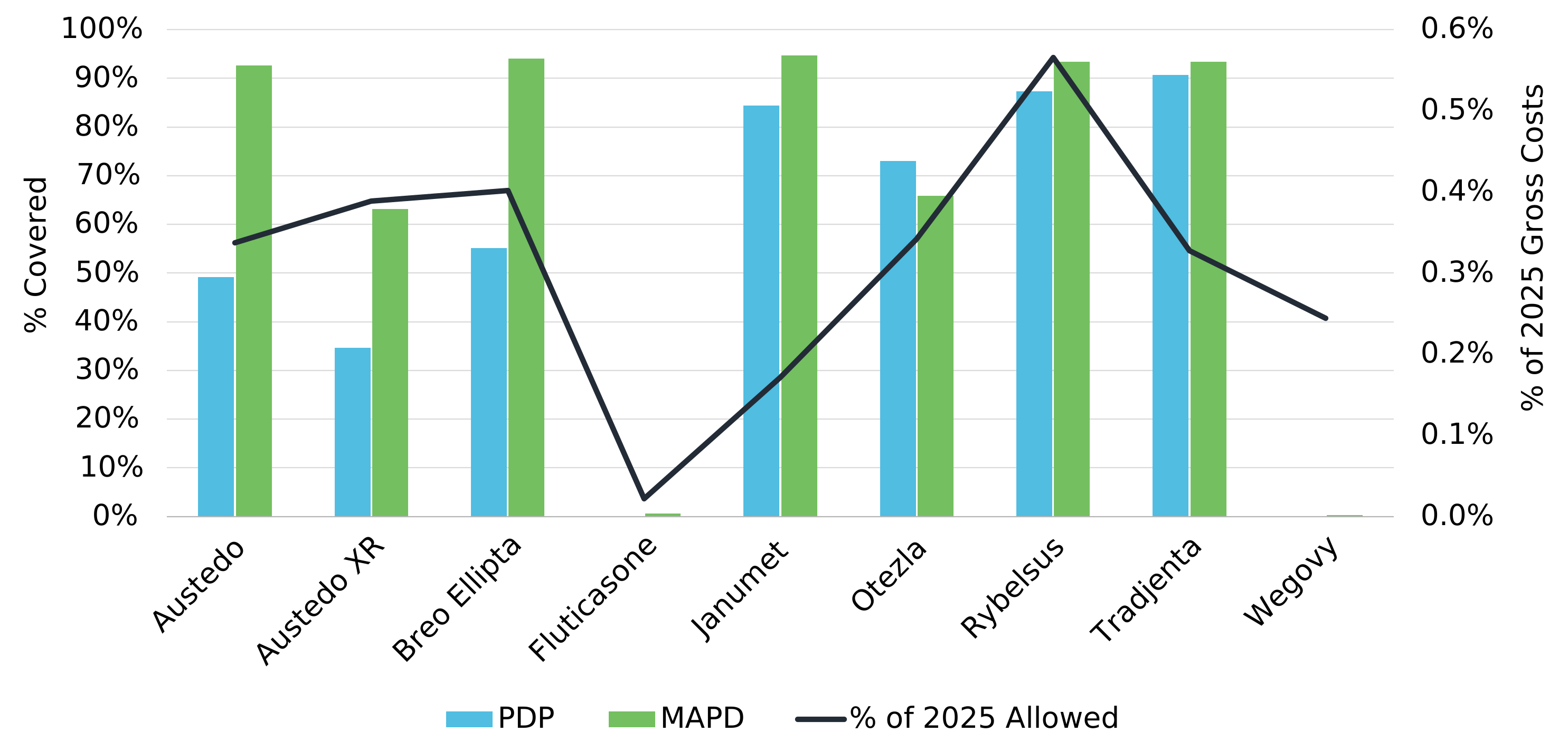
*Ozempic is not covered for 0.8% of MAPD beneficiaries but is excluded from the above graphic due to near 100% coverage.
Fluticasone furoate/vilanterol ellipta (Fluticasone) is Breo Ellipta's authorized generic.
As a result of selection, these nine drugs will have a material increase in coverage between 2026 and 2027. Most notably, Breo Ellipta’s authorized generic and Wegovy will shift from virtually no coverage to full market coverage.
Plans will need to consider the impact of MFPs on patient profitability as they design their 2027 formularies. The implementation of MFPs on these products will likely result in minimal to no rebates being offered for preferred formulary placement given CMS’ strict coverage rules. Where they have flexibility, plans and pharmacy benefit managers will continue to evaluate formulary designs based on both clinical and financial criteria.
As MFPs will impact the 2027 RxHCC risk model, plans will also need to consider the changing revenue associated with patients using IPAY 2027 drugs or therapies that compete with them. Revenue for these patients will be lower, all else equal, after incorporation of the 2027 MFPs into the risk model. To illustrate this dynamic, Figure 6 shows the change in the coefficient for RxHCC 30, diabetes with complications, resulting from 2026 MFPs.
Figure 6: Impact of IPAY 2026 MFPs on risk adjustment for diabetes
| RxHCC 30, diabetes with complications, community-rated—age 65+ | |||
|---|---|---|---|
| Metric | Non-low income | Low income | |
| 2026 model (after MFPs) | 0.567 | 0.983 | (a) |
| 2026 model (without MFPs) | 0.616 | 1.107 | (b) |
| MFP relativity | 0.920 | 0.888 | (a)/(b) |
This dynamic will exist for all RxHCC categories with material IPAY 2027 drug utilization, though the impact will vary by income status and will be highly dependent on the market share of the selected drug versus competitors, with RxHCC categories where IPAY 2027 drugs account for a greater portion of gross costs having a more material decrease.
Spotlight on semaglutide drug pricing
While Ozempic and Rybelsus have broad formulary access in Part D, Wegovy’s individual Part D coverage is minimal. Wegovy has three approved indications: chronic weight management, reduction of risk for major cardiovascular events, and treatment of metabolic dysfunction-associated steatohepatitis (MASH).4 However, only the latter two indications are Medicare-covered, which may lead plans to add utilization management criteria or leverage an indication-based formulary to manage non-Part D-covered utilization due to the requirement to cover Wegovy in 2027.
Further complicating the 2027 landscape for GLP-1s is the recently announced most-favored-nation (MFN) pricing deal, which will extend coverage to patients with obesity via a pilot program to participating plans.5 While there are many unanswered questions regarding how the MFN prices will be implemented in Medicare, the announced price is $245, 36% lower than the $386 MFP for Wegovy. Depending on how coverage of the $245 price is implemented, plan financials may look significantly different for a beneficiary taking Wegovy under the MFN or MFP price, as subsidies may vary between these pricing avenues. We will provide more details on the implementation of these prices in Medicare in future white papers as additional information becomes available.
Other considerations regarding the impact of MFPs
In addition to the direct impact of MFPs on the Part D market, there are many other considerations and intricacies to consider in parallel to the effectuation of these prices.
- 340B Rebate Model Pilot Program: On July 31, the Health Resources and Services Administration (HRSA) announced the ability for manufacturers of IPAY 2026 drugs to participate in the 340B rebate model pilot program.6 This program allows manufacturers to provide 340B concessions via a rebate as opposed to the traditional upfront discount for selected drugs. At this time, it is not clear if the same ability to participate will be extended to manufacturers of IPAY 2027 products. There has been significant concern from a multitude of stakeholders regarding the implementation of the pilot program. These concerns have resulted in Walgreens, with potentially others to follow, electing to temporarily carve out IPAY 2026 drugs from contract pharmacies.7 However, days before it was set to take effect, legal challenges led to HRSA pause implementation of the pilot program as it appeals a preliminary injunction issued by the U.S. District Court of Maine.8
- Medicaid and 340B Program participation: Effective October 1, 2025, Salix Pharmaceuticals, manufacturer of Xifaxan, elected to no longer participate in the Medicaid Drug Rebate Program (MDRP), which also removes them from 340B program participation. We estimate the Xifaxan MDRP rebate to be between 75% and 80% prior to IPAY 2027.9 As MFPs are included in the best price calculation, MFP effectuation would have increased MDRP and 340B concessions above 100% of list price. Manufacturers may consider this strategy on future selected products if the resulting decrease in best price is significant and their exposure to losses from 340B and Medicaid pricing is meaningful compared to their commercial business.
2027 MFP effectuation will have far-reaching implications across the pharmacy supply chain
With effectuation less than a year away for IPAY 2027 prices, the announcement of these MFPs will quickly flow into financial forecasts, formulary changes, and strategic market decisions. These prices are an indicator of how future negotiations may play out given deeper discounts achieved in this cycle. Navigating competitor dynamics and second-order impacts will be crucial to all stakeholders in the supply chain given the increasing interconnectedness of different markets, continually evolving Part D landscape, and the emphasis on transparency within the pharmaceutical supply chain.
1 Centers for Medicare and Medicaid Services. (November 2025). Medicare Drug Price Negotiation Program: Negotiated prices for initial price applicability year 2027. Retrieved December 18, 2025, from https://www.cms.gov/files/document/fact-sheet-negotiated-prices-ipay-2027.pdf.
2 Centers for Medicare and Medicaid Services. (January 2025). Medicare Drug Price Negotiation Program: Selected drugs for initial price applicability year 2027. Retrieved December 18, 2025, from https://www.cms.gov/files/document/factsheet-medicare-negotiation-selected-drug-list-ipay-2027.pdf.
3 Seshamani, M. (October 2, 2024). Medicare Drug Price Negotiation Program: Final guidance, implementation of sections 1191–1198 of the Social Security Act for initial price applicability year 2027 and manufacturer effectuation of the maximum fair price in 2026 and 2027. Centers for Medicare & Medicaid Services. Retrieved December 18, 2025, from https://www.cms.gov/files/document/medicare-drug-price-negotiation-final-guidance-ipay-2027-and-manufacturer-effectuation-mfp-2026-2027.pdf.
4 U.S. Food and Drug Administration. (August 2025). Highlights of prescribing information, Wegovy. Retrieved December 18, 2025, from https://www.accessdata.fda.gov/drugsatfda_docs/label/2025/215256s024lbl.pdf.
5 The White House. (November 6, 2025). Fact sheet: President Donald J. Trump announces major developments in bringing most-favored-nation pricing to American patients. Retrieved December 18, 2025, from https://www.whitehouse.gov/fact-sheets/2025/11/fact-sheet-president-donald-j-trump-announces-major-developments-in-bringing-most-favored-nation-pricing-to-american-patients.
6 Health Resources and Services Administration, U.S. Department of Health and Human Services. (July 31, 2025). HRSA announces application process for the 340B Rebate Model Pilot Program and request for public comment. Retrieved December 18, 2025, from https://www.hrsa.gov/about/news/press-releases/rebate-model-pilot-program.
7 340B Price Guide. (November 21, 2025). Walgreens to temporarily stop 340B discounts at contract pharmacies for certain expensive drugs. Retrieved December 18, 2025, from https://www.340bpriceguide.net/articles-news/147-walgreens-to-temporarily-stop-340b-discounts-at-contract-pharmacies-for-certain-expensive-drugs.
8 Hut, N. (December 29, 2025). Healthcare financial management association. 340B rebate model no longer beginning Jan. 1 after court issues preliminary injunction (updated Jan. 8). Retrieved January 9, 2025 from https://www.hfma.org/payment-reimbursement-and-managed-care/340b-rebate-model-no-longer-beginning-jan-1-after-court-issues-preliminary-injunction/.
9 Based on a class level analysis of brand anti-infective agents based on SSR Health gross-to-net estimates and calculation of Xifaxan’s list price increases since launch.